Selecting the perfect holiday evergreen is one of the season’s most enjoyable traditions.
Whether you visit a local tree farm, a neighborhood lot, or a specialty retailer, the excitement of bringing home a Christmas tree can quickly turn stressful if it is not secured properly for the drive.
A loose tree can scratch your vehicle, block your visibility, or become a hazard to other drivers. According to road safety experts, improperly secured cargo contributes to thousands of roadway incidents each year.
Taking a few extra minutes to prepare your vehicle and tie down the tree correctly can prevent damage, avoid distractions, and make the trip home much more enjoyable.
This guide explains exactly how to transport a Christmas tree safely, no matter what type of vehicle you drive.
What Is the Best Way to Transport a Christmas Tree Safely?
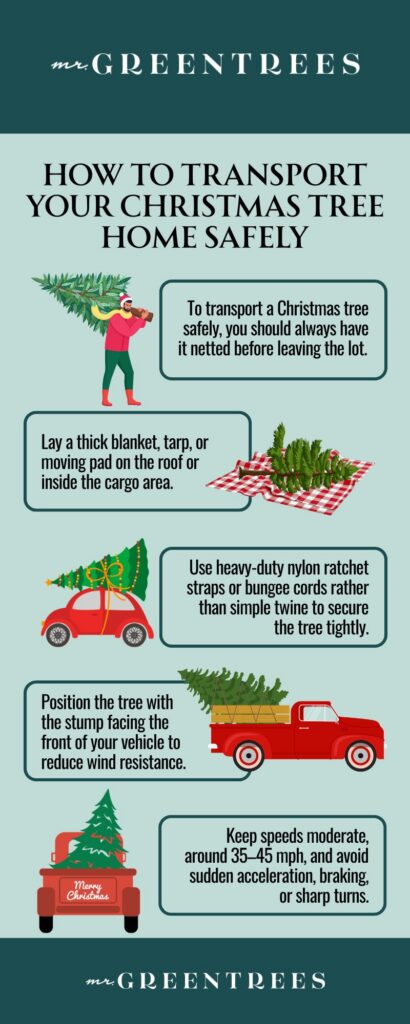
To transport a Christmas tree safely, you should always have it netted before leaving the lot. Position the tree with the stump facing the front of your vehicle to reduce wind resistance, and use heavy-duty nylon ratchet straps or bungee cords rather than simple twine to secure it tightly.
Essential Safe Christmas Tree Transportation Tips
Protecting Your Vehicle’s Exterior
One of the most important safe Christmas tree transportation tips is to protect your vehicle before loading the tree.

Lay a thick blanket, tarp, or moving pad on the roof or inside the cargo area. Pine needles can scratch paint, and tree sap can be difficult to remove once it hardens. A protective layer also helps distribute the tree’s weight more evenly and reduces the chance of dents on bare roofs.
If the tree is going inside an SUV, hatchback, or minivan, cover the floor and seat backs with a tarp to prevent sap and needles from getting into the upholstery.
Utilizing Proper Tie-Downs
The twine provided at many tree lots is useful for keeping branches compact, but it should not be your primary tie-down for driving.
For reliable Christmas tree transport, use:
- Heavy-duty nylon ratchet straps
- Cam buckle straps
- High-quality bungee cords as a secondary backup
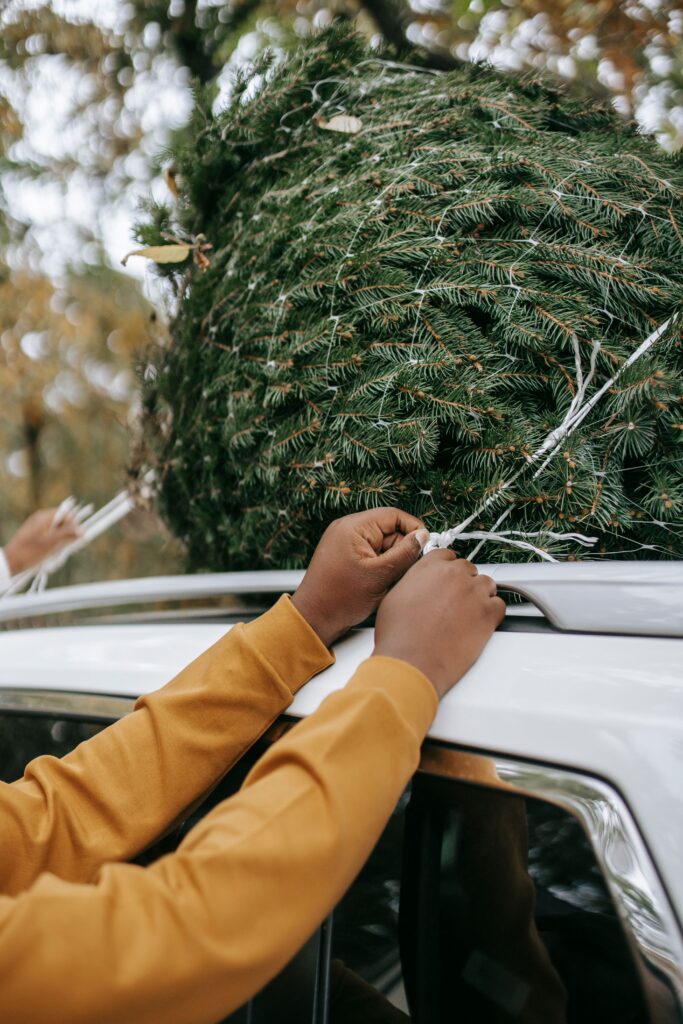
Secure the tree at two points at a minimum—front and rear. If the tree is on the roof, loop the straps around the trunk and through the vehicle’s anchor points or roof rack crossbars.
Tighten the straps firmly so the tree cannot shift when braking or turning. Avoid overtightening, which can crush branches or damage the roof.
Navigating Christmas Tree Transport Logistics
Aerodynamics and Positioning
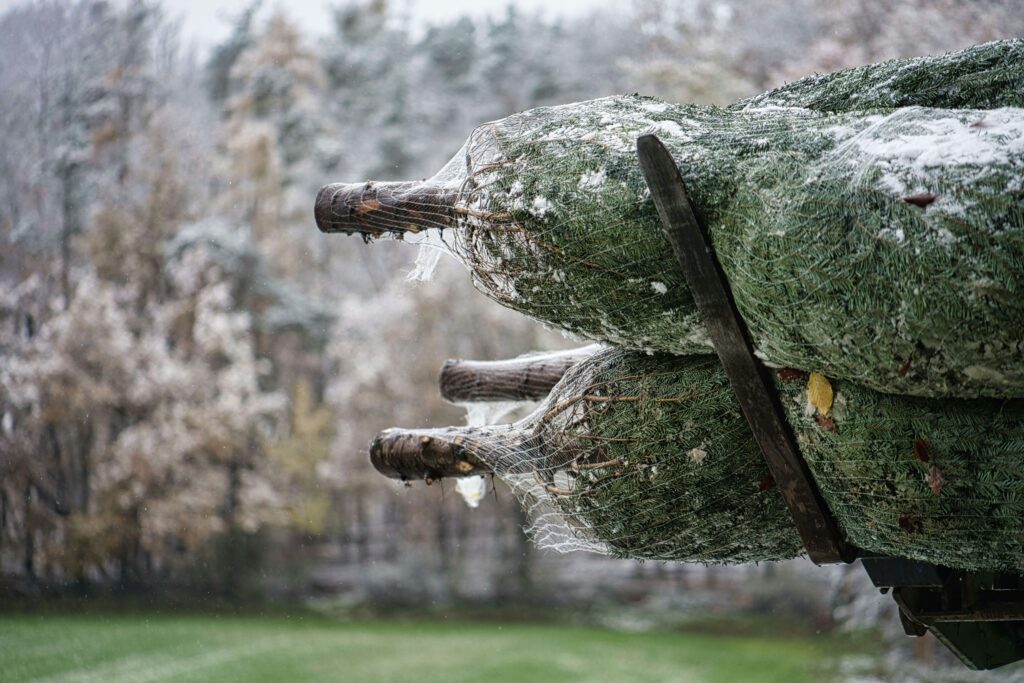
Proper positioning makes a significant difference during Christmas tree transport. Always place the base (trunk) toward the front of the vehicle. This reduces wind resistance and prevents the branches from being forced backward at highway speeds.
When the tip faces forward, the wind can catch the branches like a sail, increasing the chance that the tree will loosen or become damaged. Center the tree on the roof or in the truck bed so the weight is balanced evenly from side to side.
Ensuring Safe Christmas Travels
For genuinely safe Christmas travels, adjust your driving habits.
- Drive more slowly than usual.
- Avoid sudden braking and sharp turns.
- Choose local roads when possible instead of high-speed interstates.
- Stop after the first 2–5 miles and check all straps.
Temperature changes and wind can cause straps to loosen slightly. A quick inspection takes less than a minute and can prevent a much bigger problem later.
How to Secure a Christmas Tree on Different Vehicles
Roof Racks vs Bare Roofs
Knowing how to secure a Christmas tree depends largely on your vehicle.
With roof racks: This is the easiest and most secure roof-mounted option. Place the tree centered on the crossbars and attach ratchet straps directly to the rack.
With a bare roof: Do not rely on straps hooked to windows. Open the doors and pass the straps completely through the cabin, then close the doors over the straps. This creates a much stronger anchor point.
Use at least two straps:
- One near the front of the tree
- One near the rear
A third strap around the middle adds extra stability for larger trees.
Truck Beds and SUVs
The safest option is often to place the tree inside the vehicle.
For pickup trucks:
- Lay the tree flat in the bed.
- Position the trunk toward the cab.
- Anchor the trunk with bungee cords or straps.
- Prevent the tree from sliding during sudden stops.
For SUVs, hatchbacks, and minivans:
- Fold the rear seats down.
- Lay a tarp or blanket underneath.
- Slide the tree in carefully.
- If the trunk or hatch cannot close completely, secure it with straps and ensure the tree does not obstruct the driver’s view.
Interior transport also protects the tree from drying winds and helps preserve needle retention.

Christmas Tree Transport Comparison Table
| Vehicle Type | Ideal Tree Placement | Tie-Down Strategy | Risk of Vehicle Damage |
| SUV with Roof Racks | Centered on the roof | Ratchet straps secured to crossbars | Low (if blanket is used) |
| Sedan (Bare Roof) | Centered on the roof | Straps looped through open car doors | Moderate (watch for roof dents) |
| Pickup Truck | Inside the truck bed | Bungee cords anchoring the trunk | Very low |
| Hatchback / Minivan | Inside with seats down | Tarp laid flat; tie-downs usually unnecessary | Low (watch for interior sap) |

Ensure a Joyful and Secure Holiday Season
Preparing your vehicle properly is the easiest way to start the holiday season without unnecessary stress.
By learning how to secure a Christmas tree, using dependable tie-downs, and following proven safe Christmas tree transportation tips, you protect both your family and your vehicle.
Keep the trunk facing forward, use at least two secure straps, protect your roof or interior with a blanket or tarp, and drive cautiously. These simple Christmas tree safety tips support safer roads and help ensure safe Christmas travels for everyone.
With the right preparation, you can confidently transport a Christmas tree safely and enjoy the fun of bringing home a beautiful holiday centerpiece.
If you are selecting a fresh Christmas tree and want advice on size, netting, or the safest loading method for your specific vehicle, the team at Mr. Green Trees is happy to help. Call (310) 276–9827 or email info@mrgreentrees.com before your visit.
Getting the right guidance ahead of time can make loading easier and ensure you transport a Christmas tree safely from the lot to your living room.
Frequently Asked Questions
Point the trunk toward the front. This reduces wind resistance and helps prevent branch damage and strap loosening.
Use the twine only to keep the branches compact. For driving, use ratchet straps or strong bungee cords for proper security.
Place a blanket on the roof, center the tree, open the car doors, and loop the straps completely through the cabin before tightening them.
Sap can be difficult to remove and may affect the paint if left for an extended period. A blanket or tarp helps prevent contact.
Laws vary by location, but the tree must be securely fastened and should not create a hazard. Use straps and, if required, attach a warning flag.
Yes. Netting makes the tree more compact, easier to handle, and less likely to lose branches during transport.
Keep speeds moderate—generally around 35–45 mph when possible—and avoid sudden acceleration, braking, or sharp turns.

Leave a Reply